What are The Zones of Regulation and Why are They Important?

Updated: Aug 11
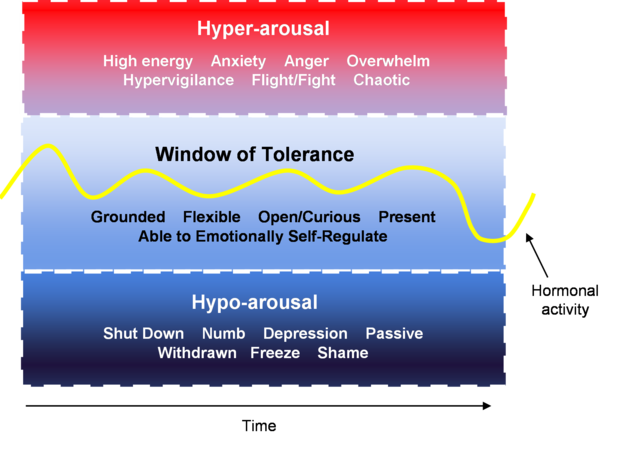
Zones of regulation, also known as the window of tolerance, refers to the state where we feel most well-regulated and can be curious, present and respond rather than react. When stress pushes you outside that window, you may become overwhelmed and anxious or shut down and disconnected.
Therapy can help you track what states you are in and notice when you are in a state of fight or flight or in a state of shutdown. Learning to notice your state, return to a regulation state more quickly, and gradually expand your window can help you navigate life's challenges with greater flexibility and resilience.
The Blue Zone
The zones or states can be thought of as colours from blue to red. The Blue Zone is understood as a state of shutdown, freeze, depression, fawn, and people-pleasing. Feeling stuck and stagnant. Everything in our body is moving slowly - mentally, emotionally, physically, and spiritually.
The antidote is: movement-physically, intellectually, emotionally, and through human connection to help regulate your system out of stagnation and shutdown.
The Green Zone
This is our state of optimal functioning, when we feel a state of ease, social connection, peace, lightness, good memory, and clear thoughts. You're able to communicate well, be curious, and validate others. You're able to put yourself in other people's shoes and understand them better.
You're not in survival mode. Your nervous system is regulated. You have access to all areas of your brain, including both your emotional and cognitive self, allowing you to think clearly and make intentional decisions.
Yellow Zone
You're starting to become activated. There are some traces of fight or flight.
This can actually be a great zone for focus, fun, play, motivation, and learning for some people, especially if they're neurodivergent. There's just enough urgency to get things done. You might feel quite locked in and focused.
In a conversation with a loved one, this might be when your voice starts to show some emotion. You may still be able to have very productive conversations and maintain a decent level of curiosity and understanding toward each other.
Orange Zone
You're in a greater state of nervous system activation (fight or flight).
You might start having thoughts about wanting to leave the situation or the conversation. You may begin defending yourself, wanting justice, or explaining your actions and your words.
You'll likely move in and out of a state of connection. At times you'll be able to listen to and validate the other person, and at other times you'll be much more interested in self-protection and self-preservation.
Red Zone
You're in full fight or flight. You're trying to get out of the situation or defend yourself.
This may be necessary if you are in an actually dangerous situation.
If you are in an interpersonal conflict and you or your loved one ends up in the red zone, things have gone too far & the only focus should be regulation. This likely means you need alone time or time with someone who can help calm you. Once in this state, it usually takes a minimum of 20 mins to calm down. This is when we are the most likely to act outside of our values, say & do things we will have to repair later. This is not the time to talk. Disengage and regulate!
There are very few productive conversations that can happen in this zone. If anything, this is where relationships are harmed the most and where the most repair has to take place.
How Can Knowing About Zones of Regulation Help Couples?
High-conflict couples often find themselves in these hotter zones. I highly recommend that both individuals and the couple together decide where they draw the line. Talk about what each zone looks like, sounds like, and feels like for each of you. Decide which zone you're still able to have productive, respectful conversations in, and make a commitment to disengage from communication as you approach the red zone.
Doing so can prevent harm to yourself, reduce the need for repair and apologies, and protect your relationship with the other person.
A Therapist's Final Thoughts on The Zones of Regulation
At times we will inevitably end up in a dysregulated state of stress or shutdown. Every zone serves a purpose, and our nervous system moves between them throughout the day. The goal is to become more aware of what state you're in, understand what your nervous system is trying to communicate, and learn the skills to respond in ways that align with your values rather than simply reacting from survival.
As your awareness grows, you'll likely notice your early warning signs sooner, recover more quickly when you're dysregulated, and spend more time feeling grounded, connected, and present. Over time, this helps expand your window of tolerance, making it easier to cope with life's inevitable stressors, navigate conflict more skillfully and feel more connected with yourself and others.
Whether you're struggling with anxiety, depression, trauma, relationship conflict, or simply feeling overwhelmed, learning to work with your nervous system can be very helpful. A counsellor can help you understand your triggers, help you learn skills and tools to regulate, identify and further utilize resources and strategies you may already be using and help you gain more confidence to respond rather than react to all that life throws at you.
If you'd like to learn more about the Zones of Regulation, explore the resources below or reach out to one of our counsellors. We can help you better understand your nervous system, recognize what zone you're in, and build the skills to regulate more effectively so you can respond to life's challenges with greater resilience and intention.
References
Fay, K. (2020, April 10). Expanding the window of tolerance. Psychology Today. https://www.psychologytoday.com/ca/blog/lifespan-psychology/202004/expanding-the-window-tolerance
About the Author
Rhianna Williams is a Registered Clinical Counsellor holding a Master’s Degree in Counselling Psychology and an undergraduate degree in Child and Youth Care. She is originally from the West Kootenay region of B.C., and grew up in a family that was impacted by many adversities and that instilled in her a strong sense of community and values centred around love and mutual support. Rhianna's career journey began with a desire to find meaningful, values-based life work and to gain the tools and insights needed to make sense of the people, places, and experiences that shaped her early life. Before becoming an RCC, she worked for over a decade as a Youth and Family Outreach Counsellor and Youth Care Worker in both the public health and nonprofit sectors. Today, her clinical practice, with Peak Experience Counselling in Squamish and online throughout BC, focuses on supporting individuals, couples, and parents.


